






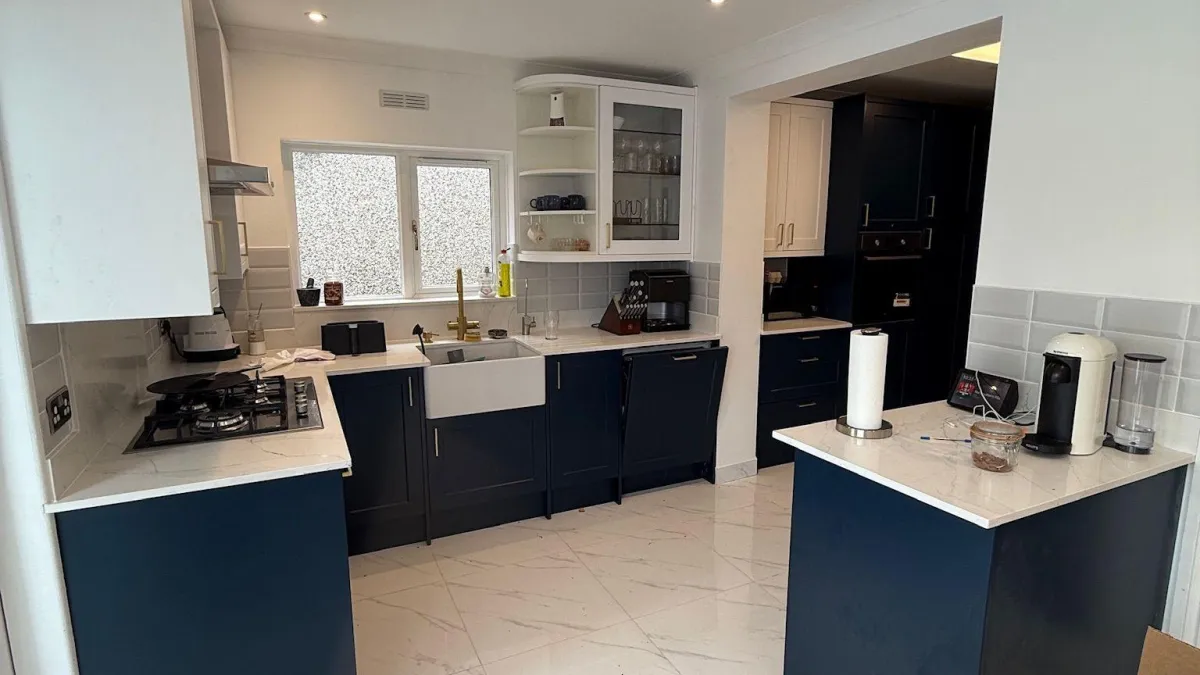
How to prevent electrical fires at home: tips from UK experts
Electrical fires account for around half of all accidental dwelling fires in England attended by the fire and rescue service — and the vast majority are preventable. Most originate not from freak faults but from avoidable habits: overloaded extension leads, counterfeit chargers, ageing consumer units with no RCD protection. Here are five things you can act on today.
1. Avoid overloading sockets
Overloading is the most common cause of domestic electrical fires. Every socket circuit in your home is protected by a MCB (miniature circuit breaker) rated typically at 32 amps for a ring final circuit. When the combined current draw of appliances plugged in on that circuit approaches or exceeds that rating, wiring runs hot — and sustained heat in cable insulation is where fires begin.
The practical rules:
Never stack extension leads (plugging one into another doubles the resistance and heat build-up)
High-draw appliances — ovens, washing machines, tumble dryers, electric showers, storage heaters — should each have their own dedicated circuit with a dedicated MCB in the consumer unit
Check your extension lead's total wattage rating (usually 2,500–3,000W) and add up what's plugged into it — most people significantly underestimate their actual draw
Replace any extension lead that shows signs of heat damage, discolouration, or a plug that runs warm to the touch
2. Know the warning signs
Electrical faults rarely occur without warning. The signs are easy to miss if you don't know what to look for, but once you do, you won't dismiss them:
Flickering or dimming lights — especially when appliances switch on, suggests a loose connection or overloaded circuit
Buzzing or crackling from switches or sockets — arcing inside the fitting; treat this as an emergency
A burning smell — plastic insulation burning, often from inside a wall or behind a fitting; call an electrician immediately
Warm or discoloured sockets and switches — heat building up behind the faceplate due to a loose connection or undersized wiring
RCDs that trip frequently — a recurring trip is a fault finding its way to earth; it needs investigation, not just resetting
Fuses that blow repeatedly — the circuit is drawing more than it can safely carry
If you smell burning
Switch off the affected circuit at the consumer unit. If you can't identify the source, switch off the main incomer and call an electrician. Do not restore power until the fault has been found and fixed — burning insulation can smoulder inside a wall cavity for hours before ignition.
3. Only use certified products
The UK market for electrical accessories, extension leads, and phone chargers contains a significant volume of non-compliant and counterfeit products. These are sold at low prices online and in discount stores, and they fail to meet the construction standards that prevent overheating and arcing.
What to check before buying any electrical product:
UKCA mark — UK Conformity Assessed; required on all electrical products placed on the UK market since January 2022. A genuine UKCA mark means the product has been assessed against BS safety standards
CE mark — still valid on products placed on the market before the UKCA transition; indicates compliance with European safety directives
BSI Kitemark — voluntary, but a higher standard than either UKCA or CE alone; the BSI independently tests products rather than relying on self-certification
Avoid chargers and extension leads sold without any safety marks, with poorly printed marks, or at prices significantly below market rate for the same specification
Charger safety
Counterfeit phone and laptop chargers are among the highest-risk items in domestic electrical fires. They lack proper isolation between mains voltage and the low-voltage charging circuit, which can result in both shock and fire. The genuine article from the device manufacturer, or a BSI Kitemark-approved third-party, is worth the additional cost.
4. Unplug appliances you're not using
High-wattage appliances left on standby or plugged in while unattended continue to draw current and generate heat. For some appliances — particularly older models without modern standby management — this is a fire risk as well as an energy cost.
Appliances worth unplugging when not in active use:
Toasters and sandwich makers — heating elements can spark from crumb build-up
Hair straighteners and curling tongs — high surface temperatures; should never be left plugged in unattended
Washing machines and tumble dryers overnight — most fire service guidance recommends against running these while asleep or out of the house
Older televisions and audio equipment — early flat screens and CRT sets have significantly higher standby draws than current models
Electric blankets — should never be left on while sleeping and must be unplugged and stored flat (not folded) to preserve element integrity
5. Get your electrics inspected regularly
Most electrical fires in older UK homes trace back to wiring that has degraded over time — brittle insulation, loose terminal connections, undersized conductors for modern appliance loads. The only way to identify these conditions is through a formal Electrical Installation Condition Report (EICR).
Current guidance and legal requirements:
Owner-occupied homes: BS 7671 recommends an EICR every 10 years for properties with fixed wiring over 25 years old; more frequently for properties with known fault history
Rental properties: EICRs are legally required at least every 5 years under the Electrical Safety Standards in the Private Rented Sector (England) Regulations 2020
Homes built before the 1990s: many will not have RCD protection on socket circuits; an EICR will identify this and a consumer unit upgrade adds it
Homes with a rewirable fuse board: ceramic fuses offer no protection against overloading; replacement with a modern consumer unit with MCBs and RCDs is one of the highest-impact safety upgrades available
What an EICR covers
An EICR assesses every fixed electrical installation: consumer unit condition, circuit wiring, earthing and bonding, socket and switch condition, and smoke detector provision. Results are coded C1 (danger present, immediate action), C2 (potential danger), or C3 (improvement recommended). A Satisfactory report confirms the installation is safe for continued use.
Your home, made electrically safe.
Volt Electrical Solutions carries out EICRs, consumer unit upgrades, and full rewires across London and Essex. NICEIC approved, Part P certified, 1-year workmanship guarantee on every job.
Call 07984 919 757 or book a free estimate online — same-day slots available.