






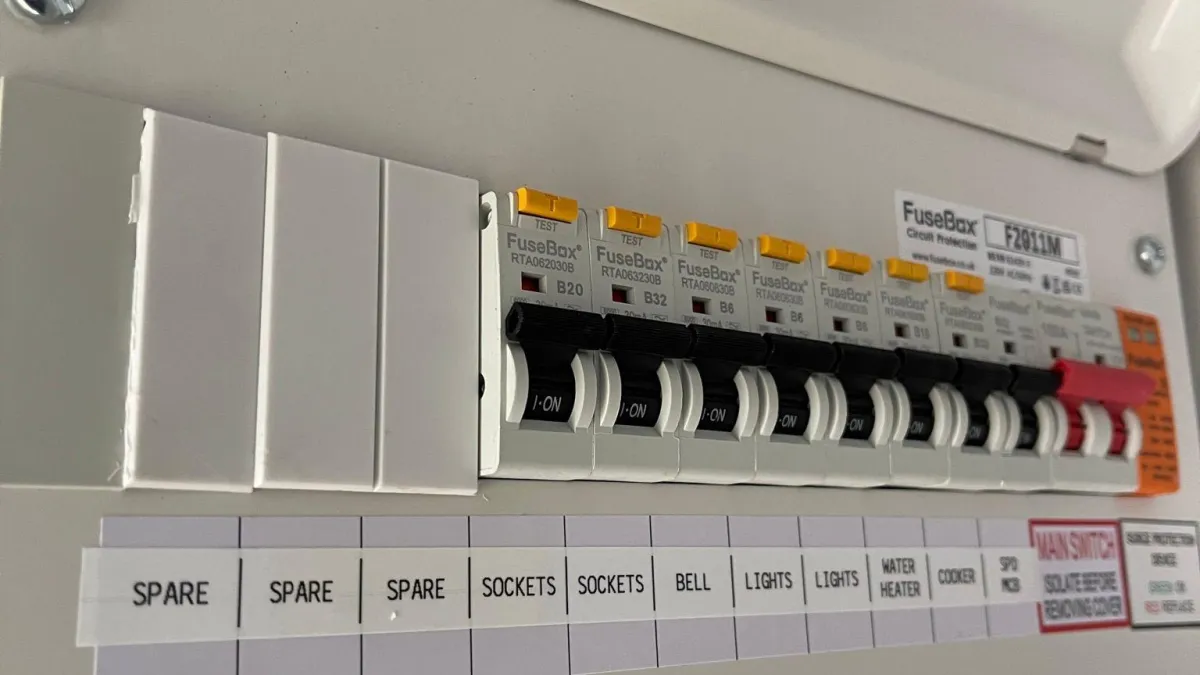
Why it's time to upgrade your consumer unit (fuse box)
Your consumer unit — the fuse box on the wall — is the most important safety device in your home's electrical system. Most people never think about it until something goes wrong. If yours is more than 20 years old, lacks RCD protection, or shows any of the warning signs below, it's time to take a closer look.
What your consumer unit actually does
The consumer unit is the central hub that splits your incoming electricity supply into individual protected circuits — lighting, sockets, cooker, shower, and so on. Each circuit has its own protective device: an MCB (Miniature Circuit Breaker) that trips if the circuit is overloaded or develops a fault.
Modern consumer units go further. They include RCDs (Residual Current Devices) that detect current leaking to earth — the type of fault that causes electrocution and electrical fires — and cut the circuit in under 40 milliseconds. Old-style fuse boxes with rewireable fuses offer none of this protection. They can't detect earth faults at all, and they respond to overloads by melting a wire rather than tripping a switch.
The practical difference is significant. A modern consumer unit with RCD protection provides a layer of safety that an old fuse box simply cannot match — and the gap between the two has widened as electrical loads in homes have increased.
Warning signs your consumer unit needs replacing
Your fuse box will rarely announce a problem loudly. These are the signs worth paying attention to:
Flickering lights or appliances that run inconsistently — can indicate loose connections in the consumer unit, a failing MCB that's not making proper contact, or a circuit running close to its limit
MCBs that trip repeatedly on the same circuit — occasional trips are normal; repeated trips on the same circuit suggest a fault, an overloaded circuit, or a failing protective device that needs assessment
Buzzing, crackling, or any sound from the fuse box — these are not normal operating sounds. Electrical arcing inside a consumer unit is a fire risk and warrants immediate inspection
Warmth or heat near the consumer unit — a correctly loaded consumer unit should be at room temperature. Heat indicates current flowing through a resistance — usually a loose termination or an overloaded circuit
Burn marks, discolouration, or a burning smell — visible scorching on or around the consumer unit means arcing or overheating has already occurred. Do not ignore this.
No RCD switches visible — if your consumer unit has only MCBs with no separate RCD devices (identifiable by their test buttons), it provides no earth fault protection. This alone is sufficient reason to upgrade.
Old-style rewireable fuses — ceramic fuse carriers with thin wire bridges are pre-1980s technology. They offer no trip mechanism, no RCD protection, and no compliance with current regulations.
Act immediately if
You can smell burning near the consumer unit, see scorch marks, or hear crackling from the board. These indicate active faults that are a fire risk. Switch off the main switch and call a qualified electrician before using the installation again.
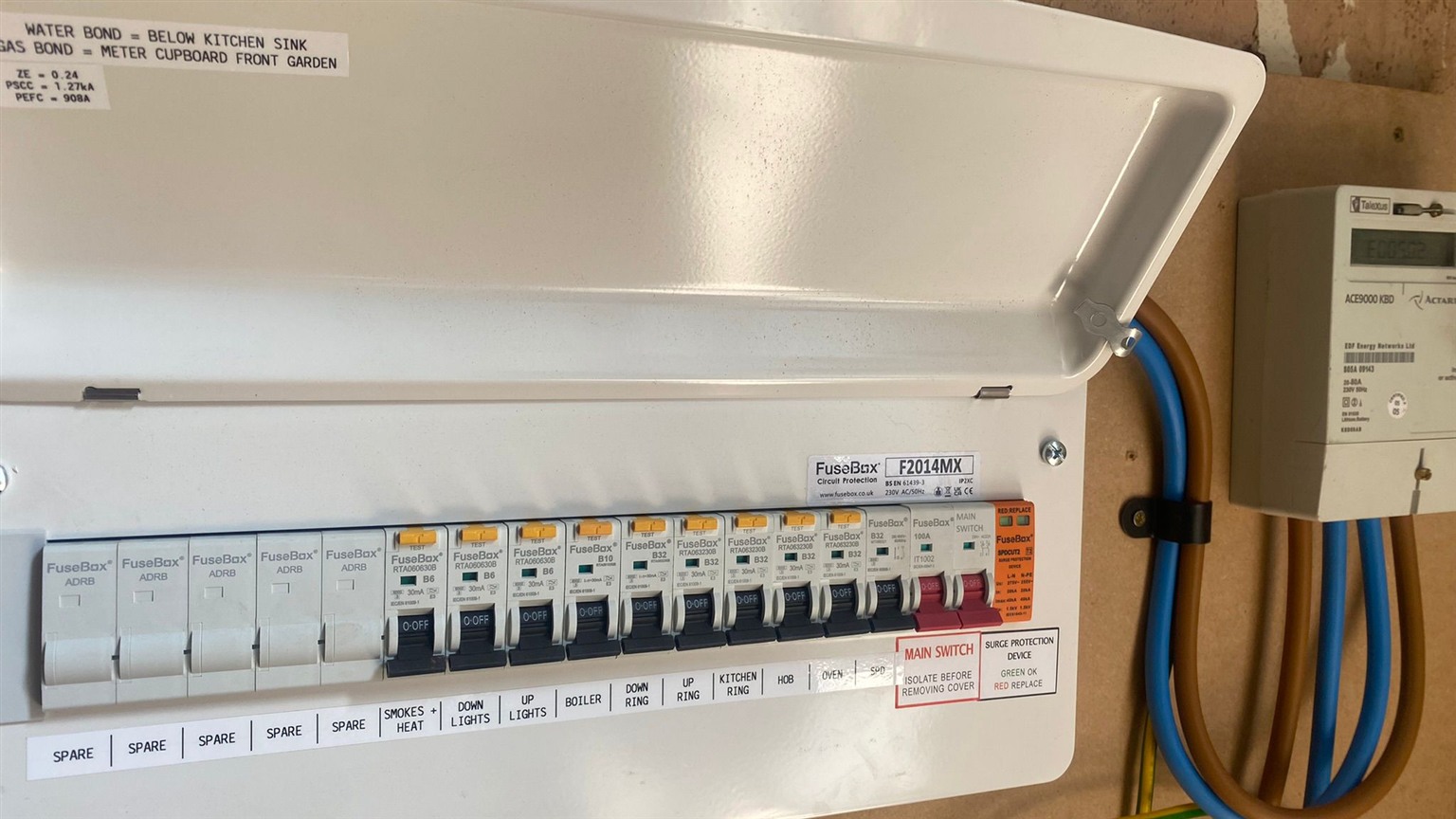
What a modern consumer unit provides
A BS 7671-compliant consumer unit upgrade gives your home several layers of protection that old fuse boxes don't have:
RCD protection on every circuit — modern units use dual RCDs or RCBOs (combined RCD and MCB in one device) so that a fault on one circuit can't knock out the entire board
Individual MCBs per circuit — correct ratings for each load, no fuse wire to replace, and a clear trip mechanism that can be reset in seconds
Surge protection — Type 2 SPDs are now recommended for all new and upgraded installations under the 18th edition wiring regulations
Clear labeling — every circuit identified, so any electrician working on the installation in the future can do so safely
Future-ready capacity — additional circuit ways available for EV chargers, solar PV, heat pumps, or additional circuits as your home's needs change
The upgrade is also a regulatory step. All consumer unit replacements are notifiable under Building Regulations Part P. A NICEIC-approved contractor self-certifies the work, notifies the local authority, and issues a signed completion certificate — the document your insurer and solicitor will ask for.
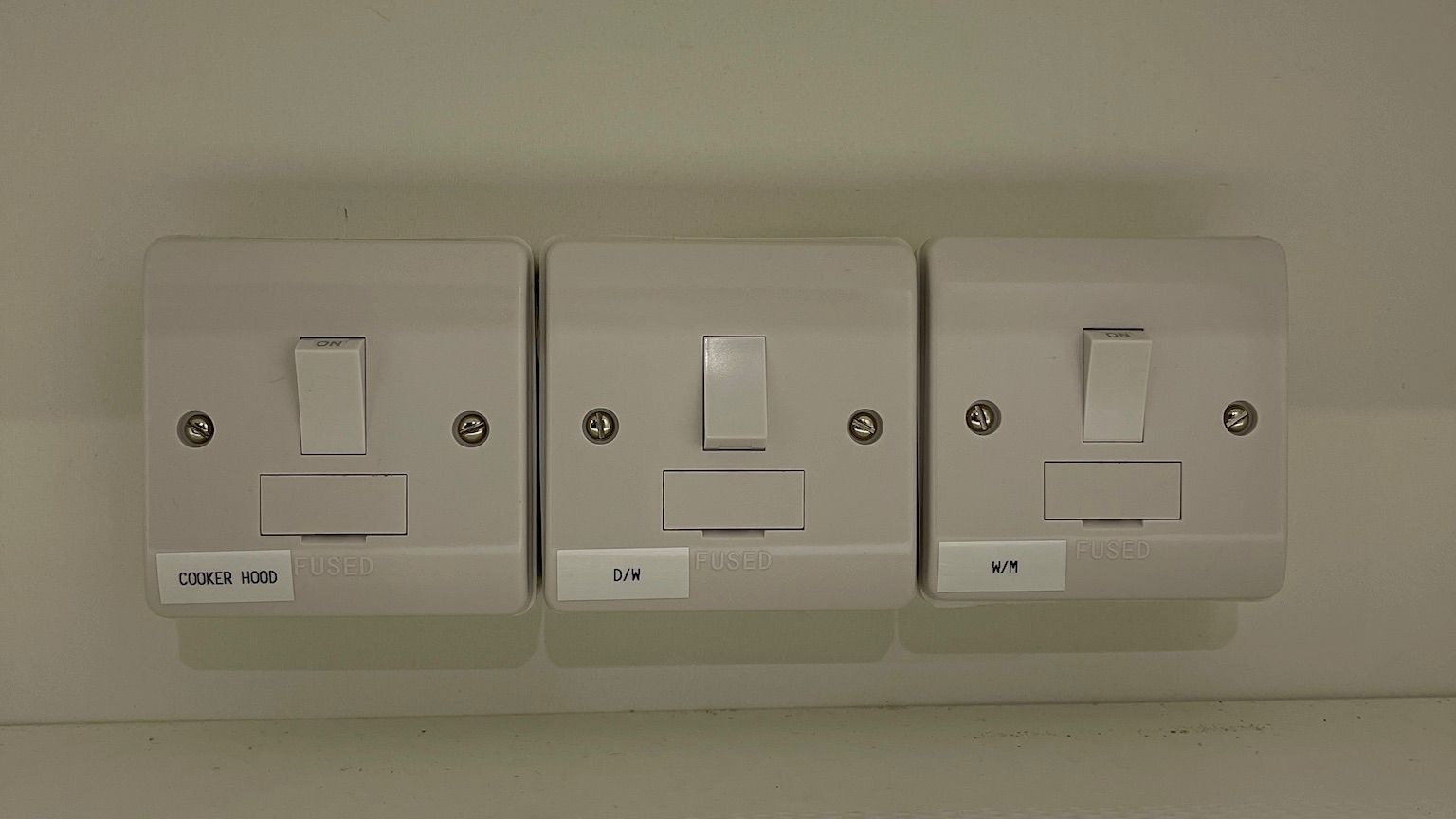
When to upgrade — and what to expect
If your consumer unit is more than 20–25 years old, has no RCD protection, or shows any of the warning signs listed above, the right time to act is now — not when a fault forces the issue. An emergency call-out after a failed board is more disruptive and more expensive than a planned upgrade.
A typical domestic consumer unit upgrade takes four to six hours for a standard-sized property. We isolate the main supply, remove the old unit, install the new consumer unit and all protective devices, re-terminate every circuit, test the complete installation to BS 7671, and label every circuit clearly before we leave. You get a signed test certificate on completion.
Not sure if you need an upgrade?
Book an EICR first. A full electrical inspection will tell you exactly what condition your current consumer unit is in, whether it meets current standards, and what — if anything — needs to change. If an upgrade is needed, we quote it at the same visit.
Don't wait for a fault. Upgrade before one finds you.
Volt Electrical Solutions installs consumer units across London and Essex. NICEIC approved, Part P certified, 12-month workmanship guarantee. Every upgrade is tested, labeled, and signed off the same day.
Call 07984 919 757 or book online — free estimates, same-day slots available.